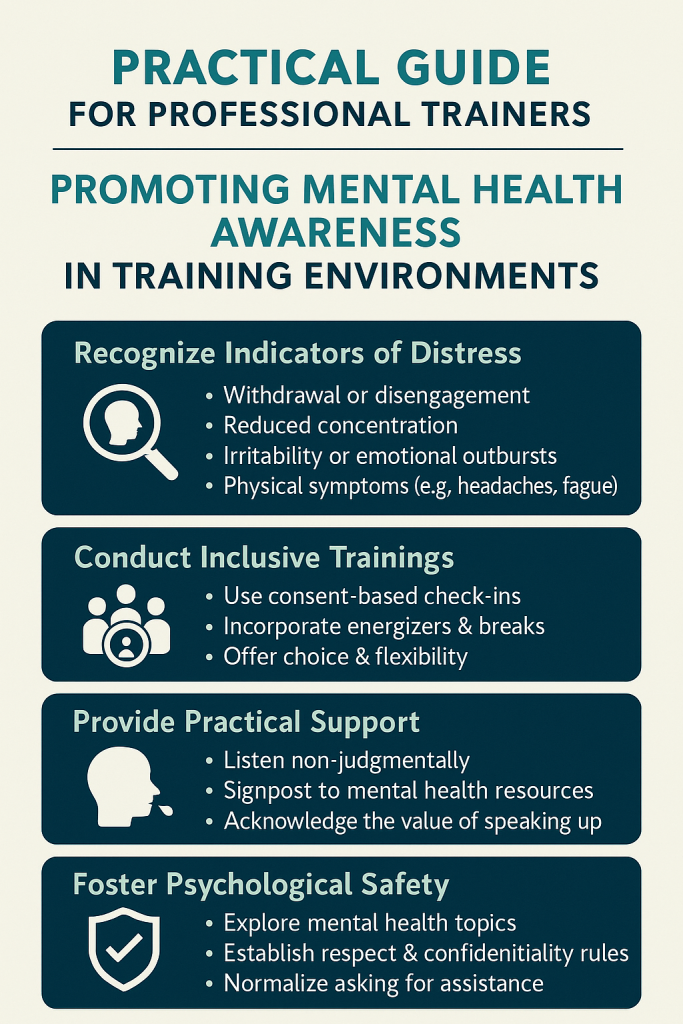
In today’s fast-paced, high-stakes learning and professional environments, the mental health of training participants can significantly impact learning outcomes, group dynamics, and overall engagement. As a professional trainer, cultivating mental health awareness is not merely a matter of ethical responsibility but a key factor in learner success. This guide outlines actionable strategies, evidence-based approaches, and useful frameworks to help trainers better support delegates facing mental health challenges and create psychologically safe learning spaces.
1. Understanding Mental Health in the Training Context
Mental health refers to cognitive, emotional, and social well-being. It influences how individuals think, feel, act, and engage in learning (WHO, 2022). Delegates may enter the training environment with a variety of mental health challenges including anxiety, depression, trauma, or burnout — all of which can affect concentration, confidence, and interpersonal engagement (Mind, 2023).
Trainers must be able to recognise signs of distress and respond sensitively, without needing to become mental health professionals.
2. Recognising Common Mental Health Challenges in Delegates
Key indicators may include:
Withdrawal or disengagement
Noticeable drops in concentration or energy
Irritability or emotional outbursts
Physical symptoms like headaches or fatigue
Absenteeism or lateness
Note: These signs should be considered in context and not judged in isolation.
3. Creating a Mentally Healthy Training Environment
A mentally healthy environment is inclusive, safe, and empowering. Trainers should adopt the following strategies:
a. Embed Psychological Safety
Create an environment where participants feel safe to speak up without fear of judgment or reprisal (Edmondson, 2019).
Tips:
Use inclusive language.
Set ground rules for respect and confidentiality.
Encourage peer support and non-competitive activities.
b. Normalize Discussions of Mental Health
Opening up space for mental health as a valid and relevant topic reduces stigma and encourages openness.
Tips:
Mention mental health in introductions or training objectives.
Signpost mental health resources and support early.
Include wellbeing check-ins or energiser activities.
c. Provide Structure and Flexibility
Many learners with anxiety or neurodiversity benefit from clear structures, agendas, and the option to step out without penalty.
Tips:
Share session plans in advance.
Build in regular breaks.
Allow autonomy in participation (e.g., choice of activities or group roles).
4. Practical Support Strategies
a. Active Listening and Signposting
When delegates disclose mental health challenges:
Listen non-judgmentally.
Avoid giving advice or diagnosing.
Signpost to appropriate services (e.g., HR, EAP, NHS, Mind).
“Thank you for sharing. I want to make sure you’re supported – would it help to connect you with someone who can provide professional advice?”
b. Use Trauma-Informed Practice
Recognise that trauma can affect learning behaviours. A trauma-informed approach means understanding that “bad behaviour” may be coping behaviour (SAMHSA, 2014).
Key Principles:
Empowerment
Safety
Trust
Collaboration
c. Adopt Inclusive Teaching Practices
Use varied learning formats (visual, auditory, kinesthetic).
Avoid putting individuals on the spot.
Respect different energy levels and emotional bandwidth.
5. Trainer Self-Awareness and Boundaries
Trainers must look after their own mental health and recognise their role boundaries.
Tips:
Debrief with peers or supervisors.
Practice self-care and reflective practice.
Know when to refer – you’re not a therapist.
6. Evaluation and Continuous Improvement
Include mental health and wellbeing questions in training evaluations.
Sample Questions:
Did the environment feel safe and inclusive?
Were you able to participate fully?
What support could have improved your experience?
Use this feedback loop to refine and adapt your practice continually.
7. Recommended Tools and Resources
Wellbeing Action Plans (Mind, 2023): Personalised plans that help people identify what keeps them well.
MHFA (Mental Health First Aid): Training for staff and trainers to respond to mental health crises.
Reflective Journals: Encourage learners to reflect on their wellbeing as part of the learning journey.
Conclusion
By fostering mental health awareness, professional trainers can create resilient, inclusive, and high-performing learning environments. Empowering learners through psychological safety, flexibility, and compassion is no longer optional — it’s a strategic imperative for modern training practices.
References (Harvard Style)
Edmondson, A.C., 2019. The Fearless Organization: Creating Psychological Safety in the Workplace for Learning, Innovation, and Growth. Hoboken: Wiley.
Mind, 2023. Mental health in the workplace. [online] Available at: https://www.mind.org.uk [Accessed 7 June 2025].
SAMHSA (Substance Abuse and Mental Health Services Administration), 2014. SAMHSA’s Concept of Trauma and Guidance for a Trauma-Informed Approach. Rockville, MD: U.S. Department of Health and Human Services.
World Health Organization (WHO), 2022. Mental health. [online] Available at: https://www.who.int/news-room/fact-sheets/detail/mental-health-strengthening-our-response [Accessed 7 June 2025].
Practical Guide for Professional Trainers: Promoting Mental Health Awareness in Training Environments
 By
/ 06/07/2025
By
/ 06/07/2025