Training

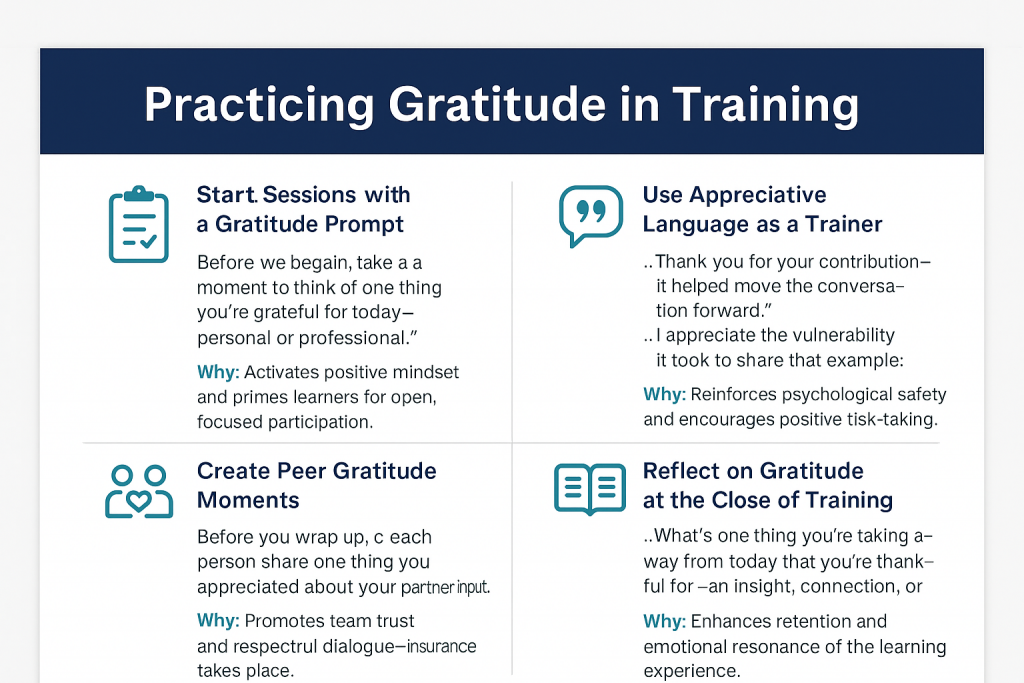
Practical Guide for Trainers: Practicing Gratitude in Training Environments

Incorporating gratitude into training enhances engagement, psychological safety, and wellbeing. It fosters resilience, social connection, and learning motivation, leading to improved mood and reduced stress. Practical strategies include starting sessions with gratitude prompts, using appreciative language, and reflecting on gratitude at the end, creating more inclusive and high-performing environments.

Practical Guide for Trainers: Practicing Gratitude in Training Environments Read More »
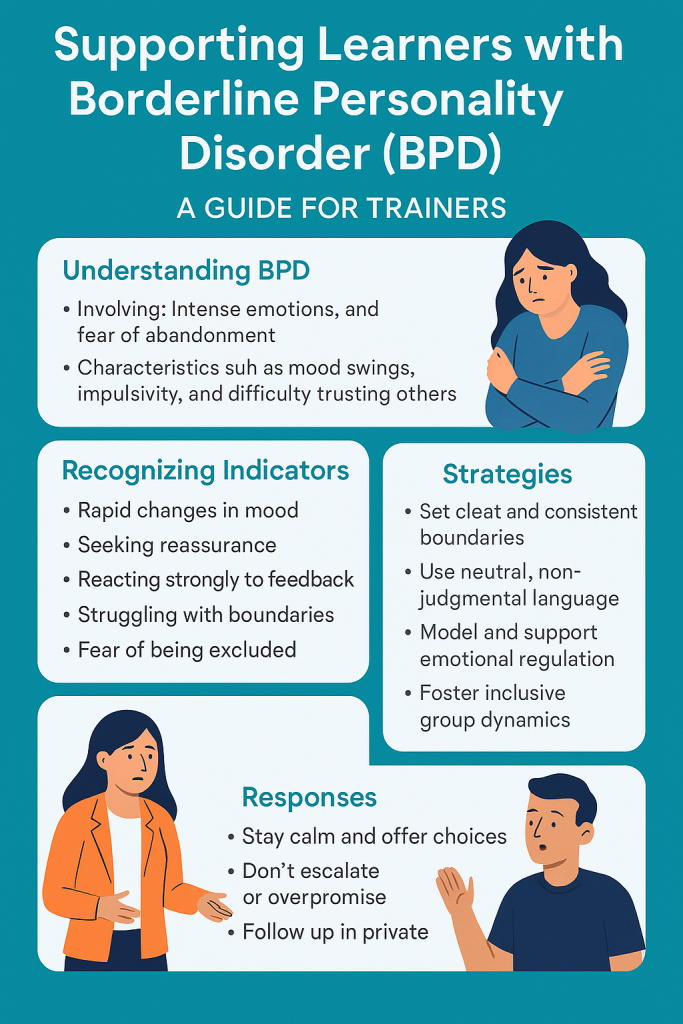
Practical Guide for Trainers: Borderline Personality Disorder (BPD) Awareness in Training Environments

Borderline Personality Disorder (BPD) affects emotional regulation and interpersonal relationships, impacting 1-2% of the population. Trainers should create safe learning environments by recognizing BPD signs, maintaining boundaries, using neutral language, and fostering inclusive dynamics. Support strategies include private check-ins and careful feedback, promoting engagement while respecting emotional vulnerabilities.

Practical Guide for Trainers: Borderline Personality Disorder (BPD) Awareness in Training Environments Read More »
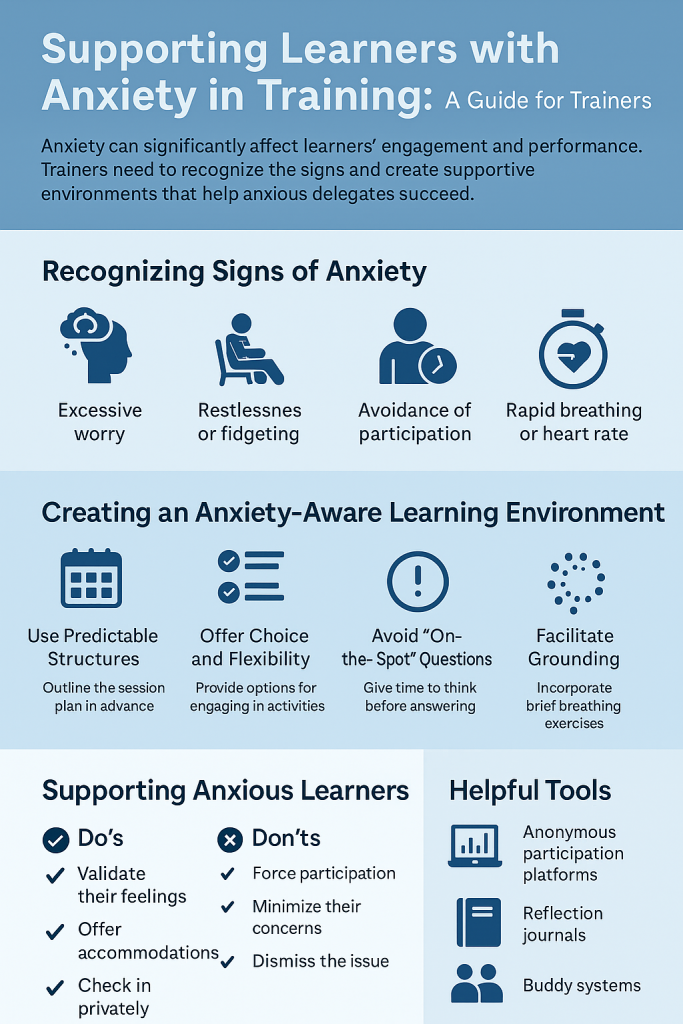
Guide for Trainers: Supporting Learners with Anxiety in Training Environments

Anxiety significantly impacts learning, especially in contexts involving performance and group interactions. Trainers should recognize anxiety symptoms and create supportive environments through predictable structures, flexibility, and mindful practices. By employing empathetic strategies, trainers can enhance learner engagement and participation, fostering an inclusive atmosphere while addressing the needs of anxious learners.

Guide for Trainers: Supporting Learners with Anxiety in Training Environments Read More »
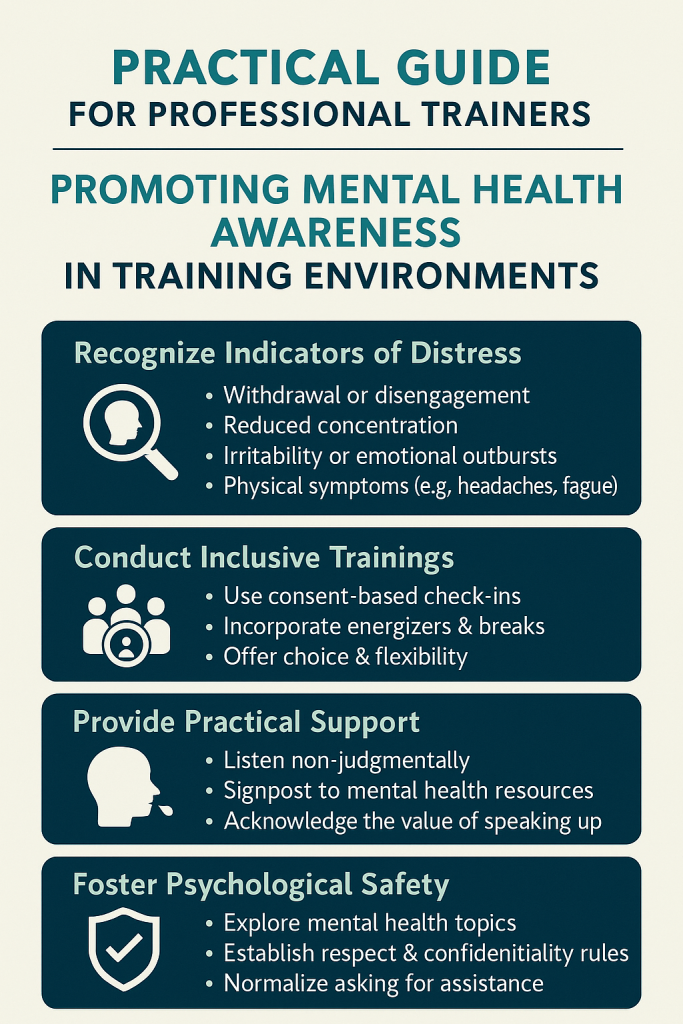
Guide for Trainers: Depression Awareness in Training Environments

Training professionals play a crucial role in addressing mental health issues like depression within learning environments. Understanding and recognizing signs of depression helps create supportive spaces. By employing flexible strategies and empathetic responses, trainers can enhance engagement, participation, and overall wellbeing, ensuring that all learners thrive in their training experiences.

Guide for Trainers: Depression Awareness in Training Environments Read More »
Trainer’s Guide to Neurodiversity in Training Delivery

Embracing neurodiversity in professional training is essential for equitable learning. Trainers should implement inclusive strategies to accommodate diverse cognitive needs, enhancing participation and engagement. Adjustments like clear structure, multi-modal delivery, and flexible participation foster an environment where neurodivergent learners thrive, maximizing their potential and enriching the overall training experience.

Trainer’s Guide to Neurodiversity in Training Delivery Read More »

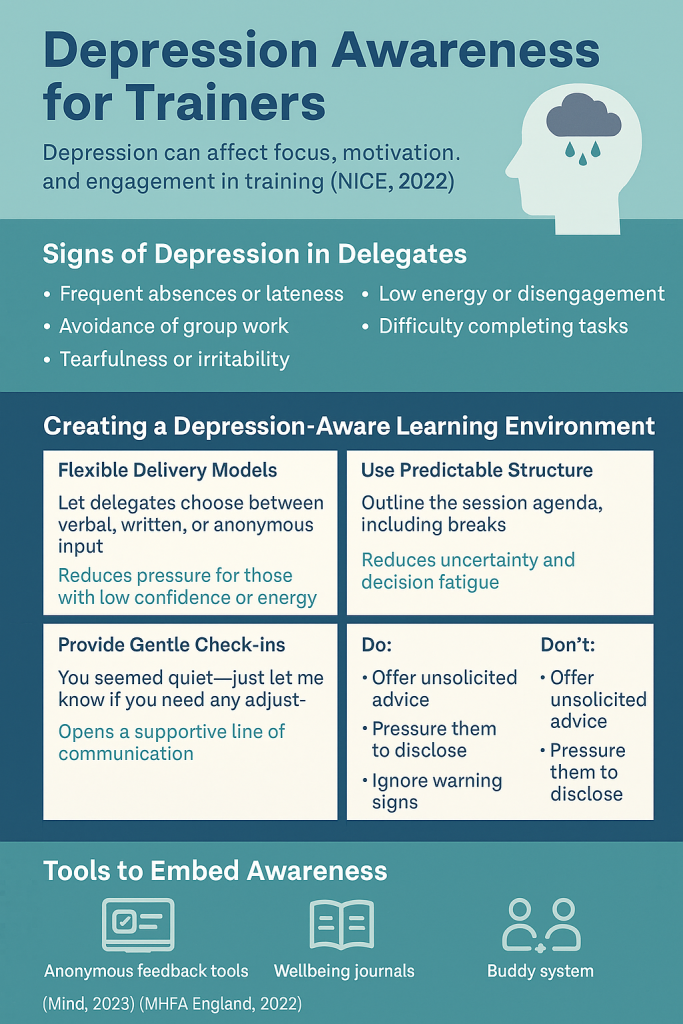
Practical Guide for Professional Trainers: Promoting Mental Health Awareness in Training Environments

In fast-paced training environments, mental health significantly influences learning outcomes and group dynamics. This guide presents strategies for trainers to support delegates with mental health challenges by fostering psychological safety, normalizing discussions, providing structure, and incorporating inclusive practices. Ultimately, prioritizing mental health enhances learning success and resilience.

Practical Guide for Professional Trainers: Promoting Mental Health Awareness in Training Environments Read More »
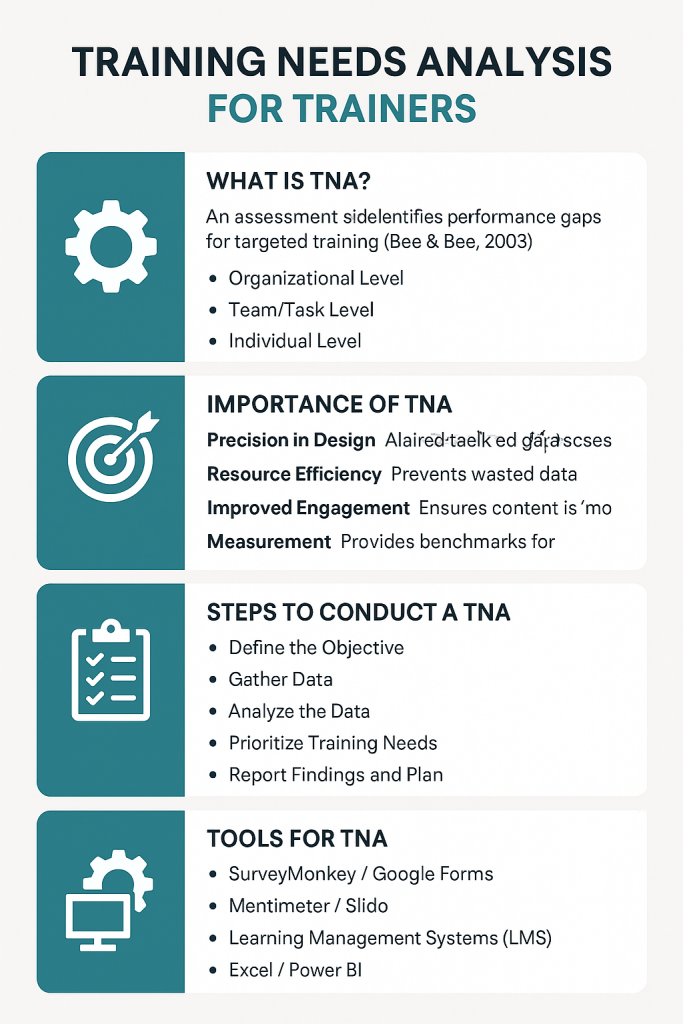
Training Needs Analysis (TNA): A Strategic Guide for Trainers

Training Needs Analysis (TNA) is essential for aligning training with organizational goals and learner needs. It helps identify performance gaps through a systematic process, ensuring targeted, resource-efficient training. Incorporating modern tools, TNA enables trainers to adapt to evolving demands, improving engagement and effectiveness in learning interventions. Mastering TNA is crucial for impactful training solutions.

Training Needs Analysis (TNA): A Strategic Guide for Trainers Read More »

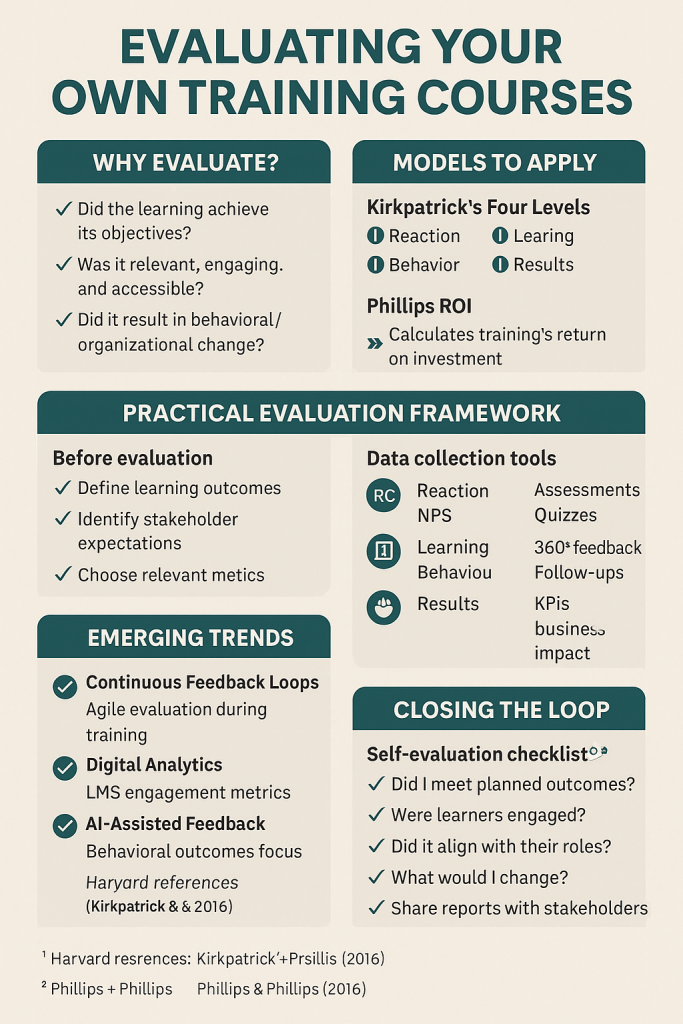
Practical Guide for Trainers: Evaluating Your Own Training Courses

In today’s learning ecosystem, training evaluation must be multi-dimensional and data-driven to demonstrate effectiveness and align with business goals. Trainers should use various models, like Kirkpatrick’s Four Levels and Phillips’ ROI Methodology, as well as real-time feedback and digital analytics to ensure continuous improvement and measurable outcomes.

Practical Guide for Trainers: Evaluating Your Own Training Courses Read More »

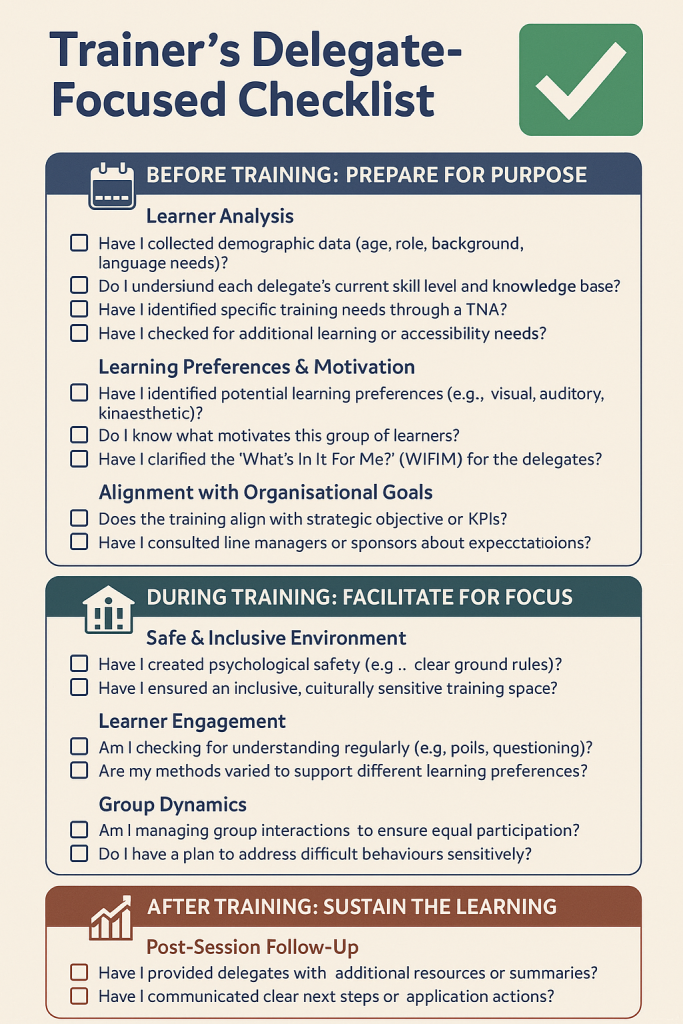
Trainer’s Guide to Planning Training: Understanding Your Delegates

Effective training design requires understanding the learners’ demographics, needs, and learning preferences. It emphasizes creating a psychologically safe environment, adapting based on real-time feedback, and providing ongoing support post-training. Focusing on these aspects ensures engagement, retention, and practical application, leading to meaningful learning impacts.

Trainer’s Guide to Planning Training: Understanding Your Delegates Read More »

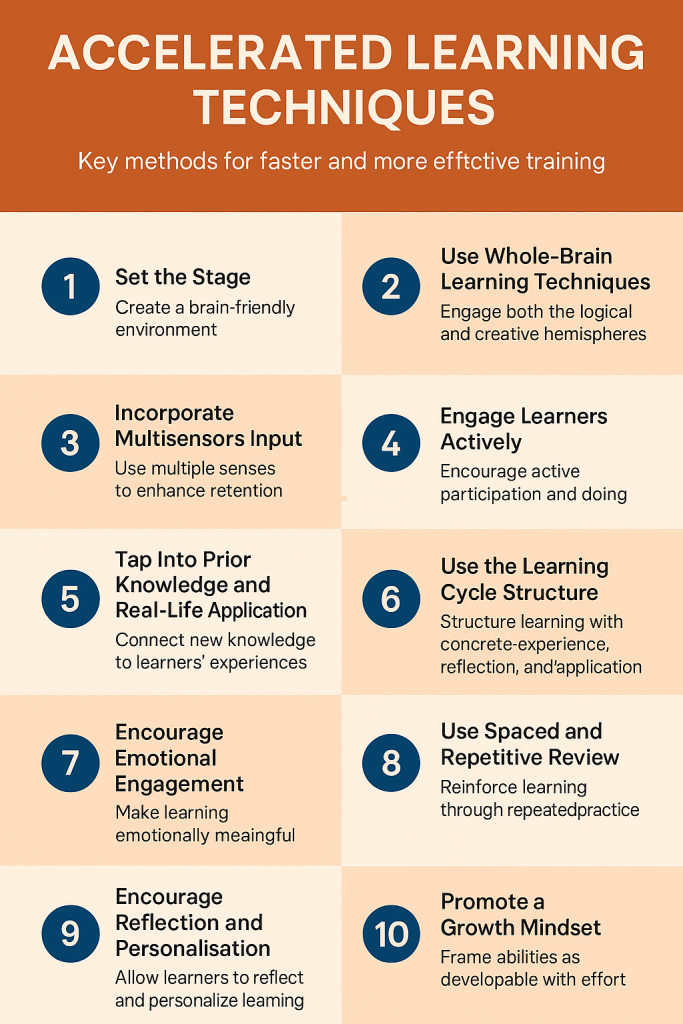
Accelerated Learning Techniques: A Practical Guide for Trainers

Accelerated learning (AL) is a learner-centered, engaging approach that enhances the speed and retention of learning. It incorporates techniques like creating a supportive environment, engaging both brain hemispheres, active participation, real-life applications, and emotional engagement. Trainers can apply these methods to ensure memorable and effective learning experiences.

Accelerated Learning Techniques: A Practical Guide for Trainers Read More »

Scroll to Top