What is Accelerated Learning?
The History of Accelerated Learning
The Evolution of Accelerated Learning: From Suggestopedia to the Digital Age
Accelerated learning has transformed the landscape of education, professional development, and cognitive performance. While its conceptual roots extend back centuries, the formalization of accelerated learning methods emerged in the late 20th century. This article explores the evolution of accelerated learning from its early formal foundations in the 1970s through the influence of neuroscience and digital technology in the 21st century.
The Emergence of Formal Accelerated Learning (1970s–1990s)
Dr. Georgi Lozanov and Suggestopedia
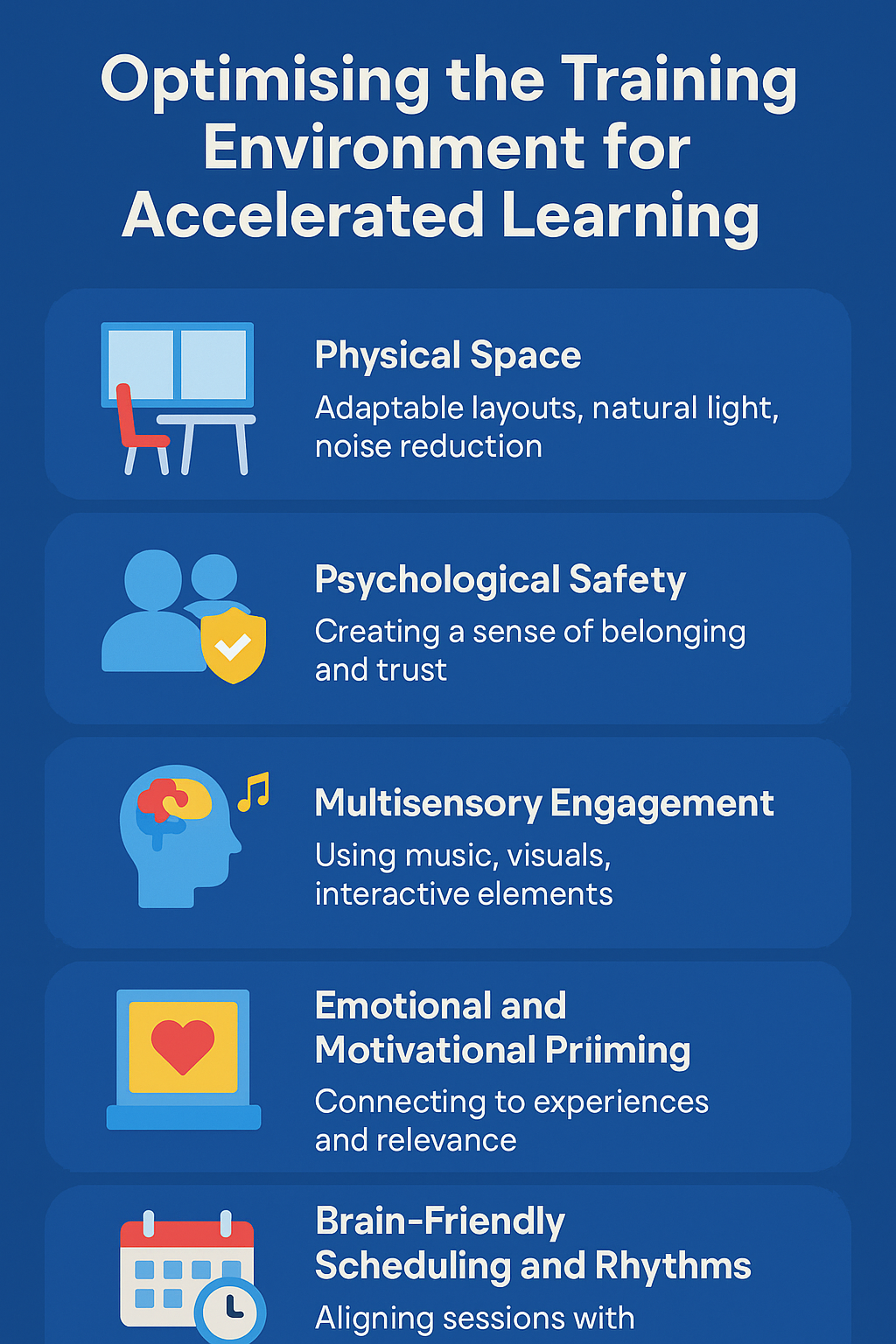
A significant milestone in the development of formal accelerated learning was the work of Dr. Georgi Lozanov, a Bulgarian psychiatrist and educator. In the 1970s, he developed Suggestopedia, a methodology based on the premise that learning can be dramatically accelerated when the learner is in a relaxed and receptive mental state (Lozanov, 1978). Suggestopedia employed techniques such as classical music, guided imagery, and positive suggestion to foster a psychologically safe and enriched environment.
Lozanov argued that traditional learning environments induced anxiety, limiting access to the brain’s full potential. By combining relaxation with structured yet creative instruction, Suggestopedia aimed to reduce psychological barriers and unlock subconscious learning capacities, especially effective in language acquisition (Lozanov, 1978).
Colin Rose and Accelerated Learning Systems
Building upon Lozanov’s foundations, Colin Rose brought accelerated learning techniques to a broader audience in the 1980s and 1990s. His influential book Accelerated Learning (1997) emphasized principles including multi-sensory learning, emotional engagement, and whole-brain strategies. Rose asserted that learning could be made faster and more effective through methods that engaged both the left and right hemispheres of the brain (Rose, 1997).
He introduced practical tools such as mind mapping (influenced by Tony Buzan), music-enhanced study environments, and guided visualizations—methods that soon found their way into classrooms and corporate training programs across the globe.
Cognitive Science and Learning Research (1990s–2000s)
As psychology and cognitive science matured, research began to support many of the principles championed by accelerated learning advocates.
Constructivism and Active Learning
Constructivist theorists such as Jean Piaget and Jerome Bruner posited that learning is most effective when learners actively construct their understanding (Bruner, 1966). This view resonated with accelerated learning’s emphasis on experiential, inquiry-based, and problem-solving approaches. Rather than relying on rote memorization, learners were encouraged to interact with content in meaningful, personalized ways.
Gardner’s Multiple Intelligences
In 1983, Howard Gardner proposed the theory of multiple intelligences, arguing that individuals possess a range of cognitive strengths—linguistic, logical-mathematical, spatial, musical, kinesthetic, interpersonal, intrapersonal, and later, naturalistic intelligence (Gardner, 1983). Accelerated learning systems incorporated this theory to design flexible curricula that catered to different learning styles, making the learning process faster by leveraging students’ innate strengths.
Neuroplasticity and the Digital Learning Revolution (2000s–Present)
Brain-Based Learning and Neuroplasticity
Recent decades have seen major advances in neuroscience that validate and refine the practices of accelerated learning. Research into neuroplasticity—the brain’s ability to reorganize itself by forming new neural connections—has confirmed that learning can occur rapidly and continuously throughout life (Doidge, 2007). Brain-based learning models emphasize physical movement, nutrition, emotional safety, and attention as crucial components of cognitive performance (Jensen, 2008).
These findings have provided scientific backing for earlier practices such as music-based learning and emotional engagement, reinforcing the idea that learning environments should be designed with the brain in mind.
Digital Technologies, Microlearning, and Spaced Repetition
With the rise of educational technology, accelerated learning has entered a new era. Online learning platforms such as Duolingo, Anki, Khan Academy, and Coursera have integrated principles like spaced repetition, gamification, and microlearning to maximize engagement and retention (Roediger & Butler, 2011). Spaced repetition, for instance, uses intervals to present information just before it is likely to be forgotten, significantly improving long-term memory.
Microlearning, the delivery of small, focused learning units, supports cognitive load theory by preventing overwhelm and encouraging consistent progress (Hug, 2005). These digital formats also facilitate personalized learning, where content adapts to the learner’s pace and proficiency, offering a highly efficient model of education.
Contemporary Thought Leaders and Applications
In the 21st century, a wave of thought leaders has popularized accelerated learning through the lens of personal development, entrepreneurship, and productivity. Jim Kwik, for instance, emphasizes brain optimization techniques, speed reading, and memory enhancement strategies tailored for the modern learner (Kwik, 2020). Similarly, Barbara Oakley has championed “learning how to learn” through cognitive science and online education (Oakley & Sejnowski, 2018).
These voices, alongside corporate training leaders, have pushed accelerated learning into the mainstream, influencing how companies onboard employees, upskill teams, and foster innovation.
Conclusion
From its roots in Suggestopedia to the high-tech platforms of today, accelerated learning continues to evolve. What began as a niche approach grounded in psychological suggestion and music-enhanced relaxation has grown into a multidisciplinary field backed by neuroscience and amplified by digital innovation. As our understanding of the brain deepens and technology progresses, the potential for even faster and more personalized learning seems boundless.
References
Bruner, J.S., 1966. Toward a Theory of Instruction. Cambridge: Harvard University Press.
Doidge, N., 2007. The Brain That Changes Itself: Stories of Personal Triumph from the Frontiers of Brain Science. New York: Viking.
Gardner, H., 1983. Frames of Mind: The Theory of Multiple Intelligences. New York: Basic Books.
Hug, T., 2005. Microlearning and Narration: Exploring possibilities of utilization of narrations and storytelling for the designing of “micro units” and didactical micro-learning arrangements. In: Proceedings of the Media in Transition Conference. [online] Available at: http://microlearning.org/micropapers/microlearning_and_narration.pdf [Accessed 4 Jun 2025].
Jensen, E., 2008. Brain-Based Learning: The New Paradigm of Teaching. 2nd ed. Thousand Oaks, CA: Corwin Press.
Kwik, J., 2020. Limitless: Upgrade Your Brain, Learn Anything Faster, and Unlock Your Exceptional Life. New York: Hay House.
Lozanov, G., 1978. Suggestology and Outlines of Suggestopedy. New York: Gordon and Breach.
Oakley, B. and Sejnowski, T., 2018. Learning How to Learn: How to Succeed in School Without Spending All Your Time Studying. New York: TarcherPerigee.
Roediger, H.L. and Butler, A.C., 2011. The critical role of retrieval practice in long-term retention. Trends in Cognitive Sciences, 15(1), pp.20-27.
Rose, C., 1997. Accelerated Learning: How You Learn Faster and Remember More. London: Accelerated Learning Systems Ltd.